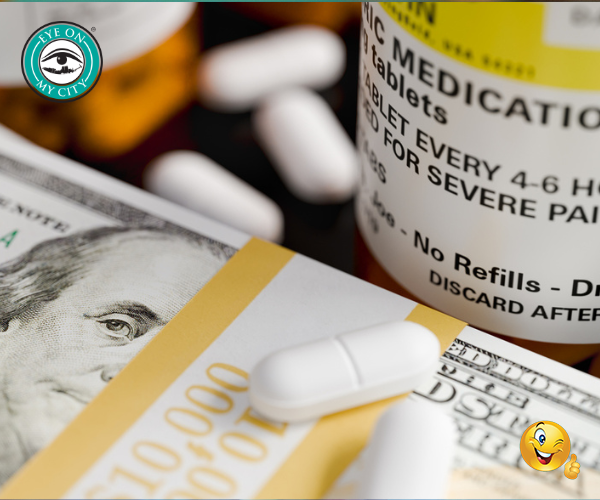
One of the few issues that Americans can agree on is that our health care is too expensive and difficult to access. Americans can’t afford health care, regardless of whether they have insurance. The average family plan has a $4,000 deductible, and most Americans can’t afford a $1,000 emergency. That means most families are one emergency room visit away from financial hardship.
To address this healthcare crisis, four preeminent conservatives have crafted a plan to fix healthcare. They are Stephen Moore of the Wall Street Journal, Tomas Philipson, a healthcare economist, Steve Forbes of Forbes Magazine, and Phil Kerpen, chairman of the Internet Freedom Coalition. The plan they developed is called the Most Favored Patient (MFP) Plan.
This free-market proposal focuses on three key goals:
- Reducing healthcare costs
- Increasing U.S. manufacturing and innovation
- Eliminating fraud, waste, and abuse
💊 The Prescription Drug Price Crisis
It’s no secret that Americans pay the highest prices in the world for brand-name prescription drugs. A 2024 RAND Corporation study found that the United States pays more than four times what other comparable nations pay for the same medications.
The MFP Plan zeroes in on that problem — and offers solutions that could finally restore fairness to the system.
⚖️ The MFP Plan — And a Physician’s Perspective
MFP Response: Allow direct-to-consumer purchasing of medications from the manufacturer or pharmacy to cut out middlemen who inflate prices.
Physician Response: Agreed. Cutting out middlemen will bring transparency and real savings to patients.
MFP Response: Reform Pharmacy Benefit Managers (PBMs) by ending exemptions from anti-kickback laws and passing all rebates to patients.
Physician Response: Correct. PBMs have become profit centers that manipulate formularies and drive prices higher.
MFP Response: Reform Group Purchasing Organizations (GPOs) that control hospital drug access.
Physician Response: Also correct. GPOs have distorted the hospital market and inflated prices through kickbacks.
MFP Response: Require other countries to pay their “fair share” through trade agreements.
Physician Response: Unrealistic. Other nations will not agree, and it doesn’t close the price gap for Americans.
MFP Response: Oppose government price controls.
Physician Response: The U.S. is the only major country that doesn’t negotiate drug prices. That’s not a free market — that’s exploitation.
🇺🇸 Real-World Comparison: What We Pay vs. The World Pays
Here’s what “overpaying” looks like for two popular drugs:
🔵 Humira Costs (Autoimmune & Inflammatory Diseases)
╔══════════════════════════════════════╗
United States — $7,300
France — $632
Australia — $601
Slovakia — $488*
╚══════════════════════════════════════╝
🔴 Ozempic Costs (Diabetes & Weight Loss)
╔══════════════════════════════════════╗
United States — $936
United Kingdom — $93
Australia — $87
France — $83*
╚══════════════════════════════════════╝
*Represents the price the United States should pay.
📉 Failed Negotiations — and a Lesson in Leadership
Under the Biden administration’s Inflation Reduction Act of 2022, the Department of Health and Human Services was tasked with negotiating ten drug prices under Medicare. The results?
- Before negotiation: $18,234.02
- After negotiation: $14,656.64
- Lowest international price: $2,664.40
Even after “negotiations,” Americans still paid $11,992.24 more than the lowest global prices for the same drugs.
One shocking example:
- Novolog (Insulin)
- U.S. before negotiation: $39.72
- U.S. after negotiation: $19.86
- Australia: $2.26
That’s not a deal — it’s a failure. Patients die when they can’t afford insulin.
💪 A New Direction — and a Promise
On May 12, 2025, President Trump signed an Executive Order to deliver most-favored-nation pricing to American patients — ensuring the U.S. pays no more than any other comparable country.
He noted that while America represents less than 5% of the world’s population, we account for 75% of global pharmaceutical profits. That’s unacceptable.
And in September 2025, the White House announced the first successful deal for lower drug prices with Pfizer. Now, all 50 state Medicaid programs will have most-favored-nation pricing for Pfizer products — and consumers will soon be able to buy many of those drugs directly at dramatically lower prices.
🕊️ The Bottom Line
The Most Favored Patient Plan takes the right approach — a mix of free-market reform and consumer empowerment. But to truly make healthcare affordable, the U.S. must negotiate drug prices on behalf of its citizens — just as every other nation does.
Until then, Americans will keep paying the price — with their wallets and, too often, their lives.